 Nov 28, 2026
Article 4: Marketing and Communications—Guardrails Are Essential Here Too
This is the last article published about Guardrails in AI. When we talk about brand care—that is, protecting…
 LATAM SCALEUP
BLOG
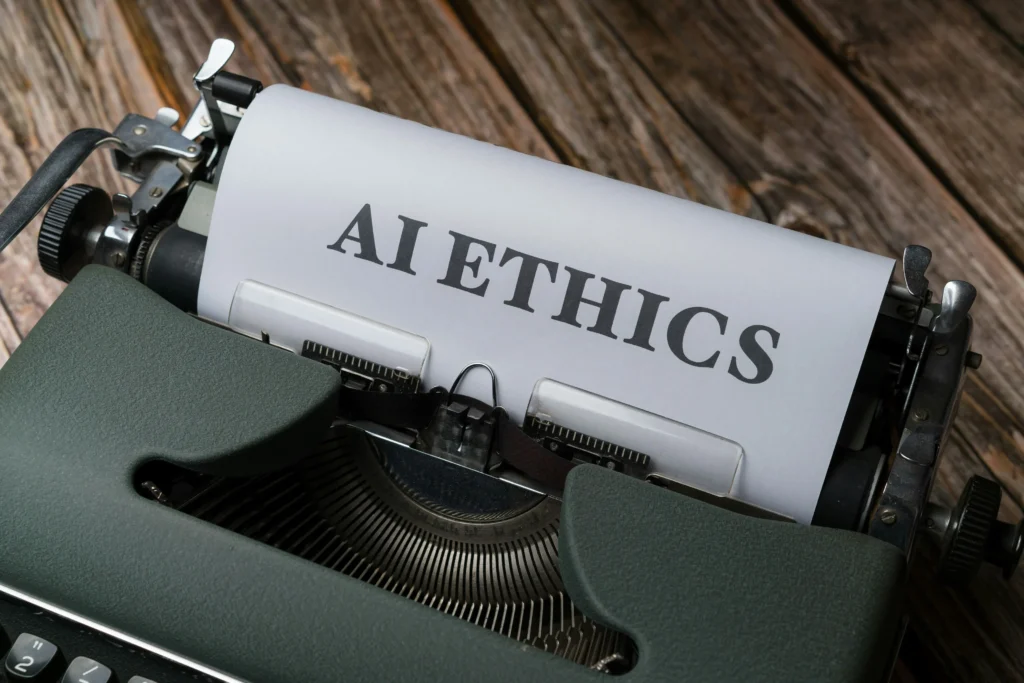
From the moment AI became more visible and tangible to the general public, experts from different sectors of society began warning about the dangers of its indiscriminate use.
The reality is that platforms providing access to AI spread so rapidly beginning in 2022 that they attracted millions of users in just one year.
The rush among end users also fueled a race among companies to adopt AI more broadly.
The race that created this hype also brought problems, increasing risks and uncertainty.
The resources required to invest in robust technology and ensure reliable outcomes, together with the speed and reach at which errors can spread across business ecosystems, began raising red flags in many departments and boards. This does not even account for the effects on workforce management decisions and the consequences of massive job cuts.
Against the backdrop of these remarkable changes, one important consideration is emerging forcefully at the heart of this transformation: the need to define ethical standards within organizations and translate them into essential operating rules for information processing and decision-making.
There is no denying that the mass adoption of AI is forcing companies to put their houses in order before advancing to a new organizational level.
Ethics is moving to a higher level and becoming one of the critical elements of this new journey.
A 2025 Stanford report on AI ethics—the Responsible AI chapter of the AI Index Report 2025 (Stanford HAI)—describes in detail the fundamental considerations in this area. Privacy and data governance must be subject to much stricter controls, and transparency must permeate the entire process, enabling the organization to understand where data came from and how it was used. Companies will need to document in detail how AI models were trained, clearly explain material decisions so that boards and regulators can verify what was established, and maintain traceability of algorithmic decisions.
AI bases its outputs on the company’s data repository and needs guardrails to recognize that some information may no longer be valid. Organizations must clearly establish that AI cannot discriminate against social groups or exhibit racial, gender, age, or other forms of bias. If these are values we intend to uphold, we must define these boundaries clearly for AI. Without clear definitions, companies will likely face reputational crises from which recovery may be difficult.
System security is also crucial in the age of AI. Beyond security, however, organizations will need structures that continuously monitor hallucinations and errors and repeatedly test AI behavior patterns.
In other words, matters that were once addressed through charters and statements—often prepared by a law firm or public relations agency and then placed in a drawer or folder—now require concrete, visible, and transparent evidence. These documents will come to life and be revisited regularly.
Putting the house in order and introducing parameters that do not make the organization rigid, while still ensuring a meaningful level of security, is neither easy nor quick.
Moving from words to action will take years, and the risks associated with this delay are also significant.
It is difficult to believe that creating ethics committees alone will be sufficient to address this challenge. Companies will need qualified board members who can bring insight into responsible AI, technology risk, algorithmic governance, and digital compliance, to name only a few areas. Operational maturity will have to advance quickly but safely. Boards will also need professionals with expertise in reputation to connect the company’s voice with the reality of frontline operations. Inconsistencies will carry a high price in the age of AI.
Boards will become more complex and more open to dissent. Sound decisions that provide greater confidence to advance—consistent with each organization’s level of maturity—will emerge from different perspectives, questions, and even apparent contradictions. This context also creates a need to involve users, employees, and other stakeholders in defining reliable parameters for the AI adopted by the company. This movement may feel unfamiliar to some organizations, particularly those accustomed to more traditional governance models. Nevertheless, it will be highly valuable in preventing the reputational, financial, regulatory, and security risks that are increasingly present in the age of artificial intelligence.
The history of corporate governance has always been the history of creating mechanisms that allow organizations to grow without losing control. Artificial intelligence does not change this principle; it merely expands it. As algorithms begin to influence critical decisions, boards will need to evolve beyond their traditional oversight role and assume responsibility for governing intelligent systems, their impacts, and their risks.
In the coming years, boards will be evaluated not only on their ability to oversee financial results but also on their ability to govern algorithms, protect human values, promote stakeholder trust, and ensure that technology remains in service of the organization’s strategy and purpose. Ethics will cease to be merely a statement of intent and will become an operational component of governance, embedded in day-to-day processes, controls, and decisions.
The real question is not whether your company will use artificial intelligence. The question is whether it will be able to do so ethically, transparently, and responsibly, translating its values into concrete and sustainable decisions for the future. After all, in a world increasingly shaped by algorithms, technology may accelerate decision-making, but responsibility will remain fundamentally human.
About the Authors:
Sandra Sinicco is an entrepreneur, board member, and specialist in business internationalization, innovation, and communications. She is CEO of LatamScaleUP and GrupoCASA and leads Tech Brazil Advocates. Throughout her career, she has supported more than 500 companies entering and expanding across Latin America. She also works on corporate governance, startup development, global mindset, and businesses that generate positive social and environmental impact.
Fabio Teixeira is an executive, board member, entrepreneur, and author with more than 30 years of experience in leadership, business transformation, and international operations. He is co-founder of FD AI & Tech Solutions and author of Boarding the Future: Governing Transformation from Boardroom to Startup. He holds the NACD Directorship Certified™ credential and is specialized in technology and responsible artificial intelligence governance. He works at the intersection of corporate governance, artificial intelligence, innovation, and business transformation, advising boards, executives, and technology companies.
KEEP READING
Nov 28, 2026
This is the last article published about Guardrails in AI. When we talk about brand care—that is, protecting…
 Nov 2, 2026
Segundo artigo da série sobre Guardrails para Inteligência Artificial . English version below the Portuguese. *Fabio Teixeira…
 Oct 19, 2026
Este é o primeiro artigo de uma série de 4, aprofundando o tema dos guardrails, que quer…